2026 guide

The pool cover & roller buying guide

How to choose the right cover — micron grades, cover types, sizing and warranties — explained plainly by a team that’s supplied Australian-made covers, rollers and liners for 21 years.
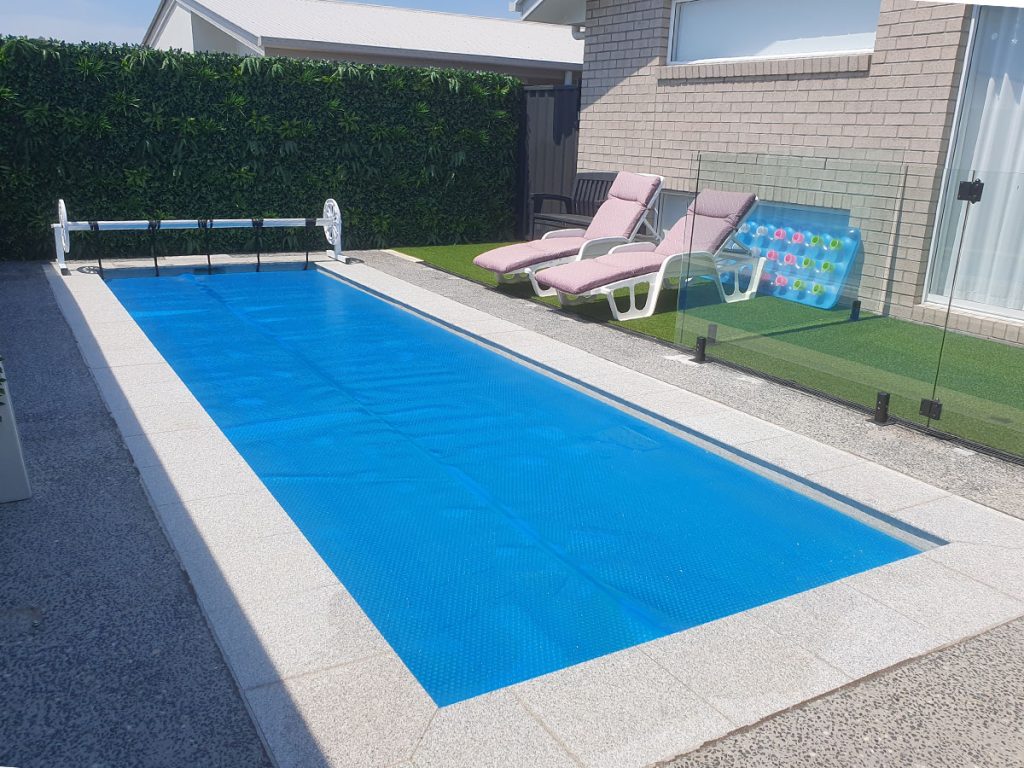
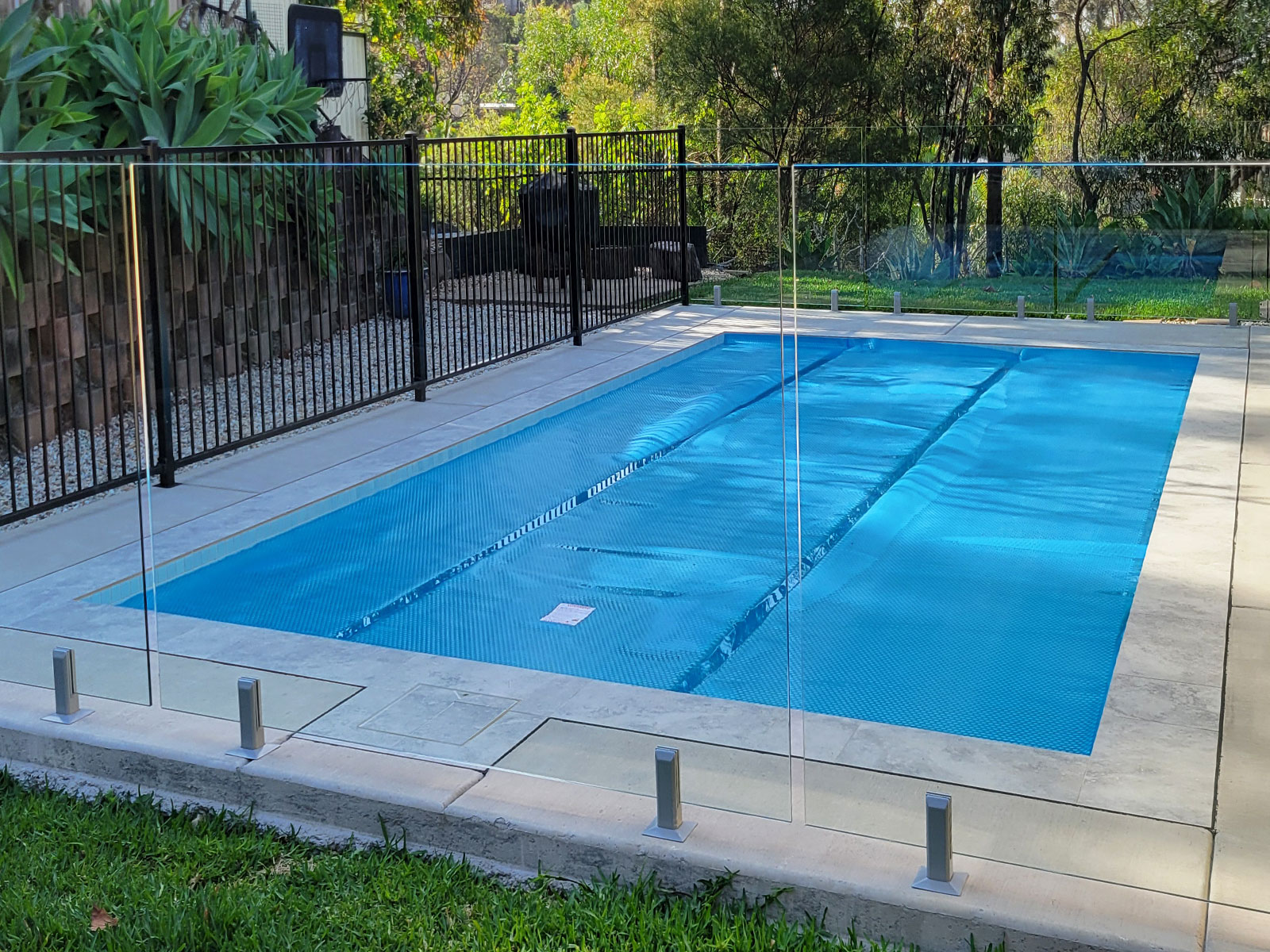
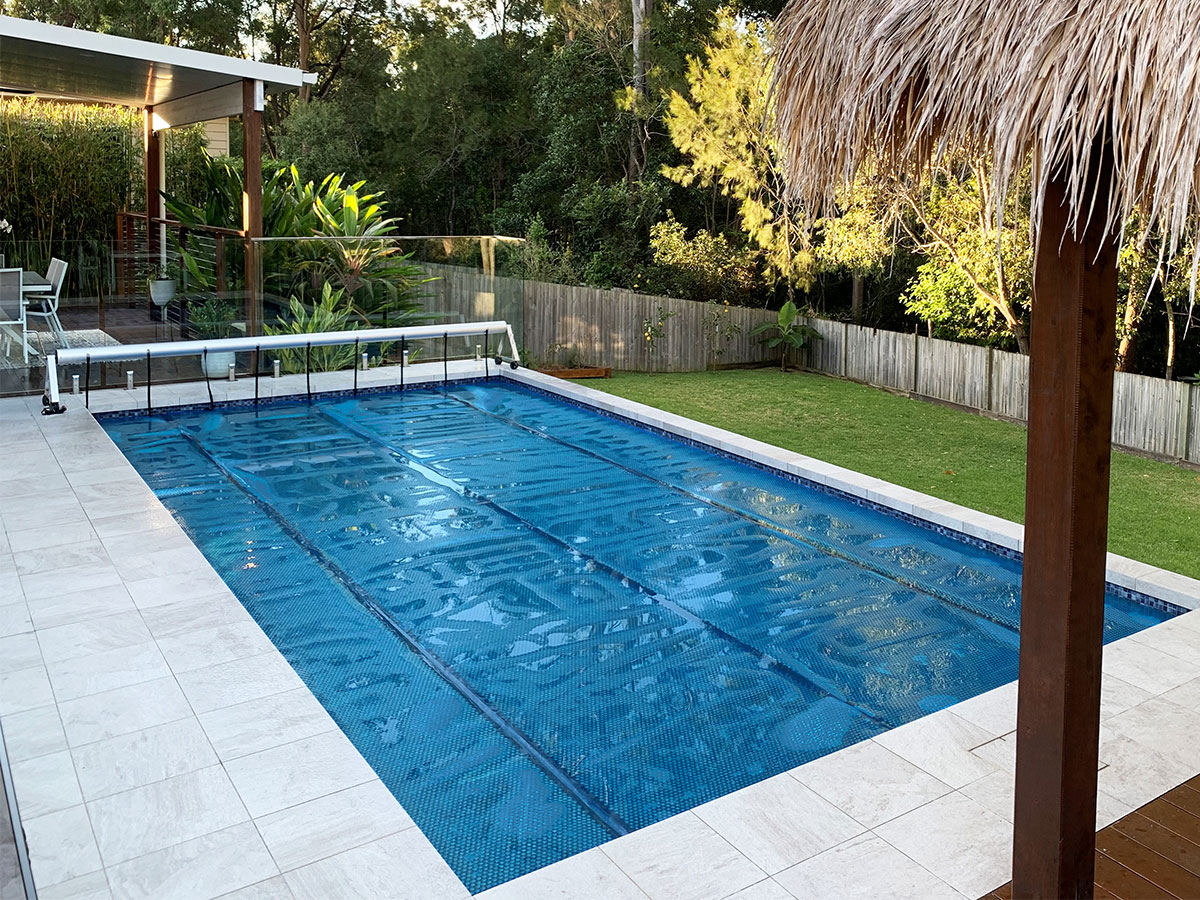
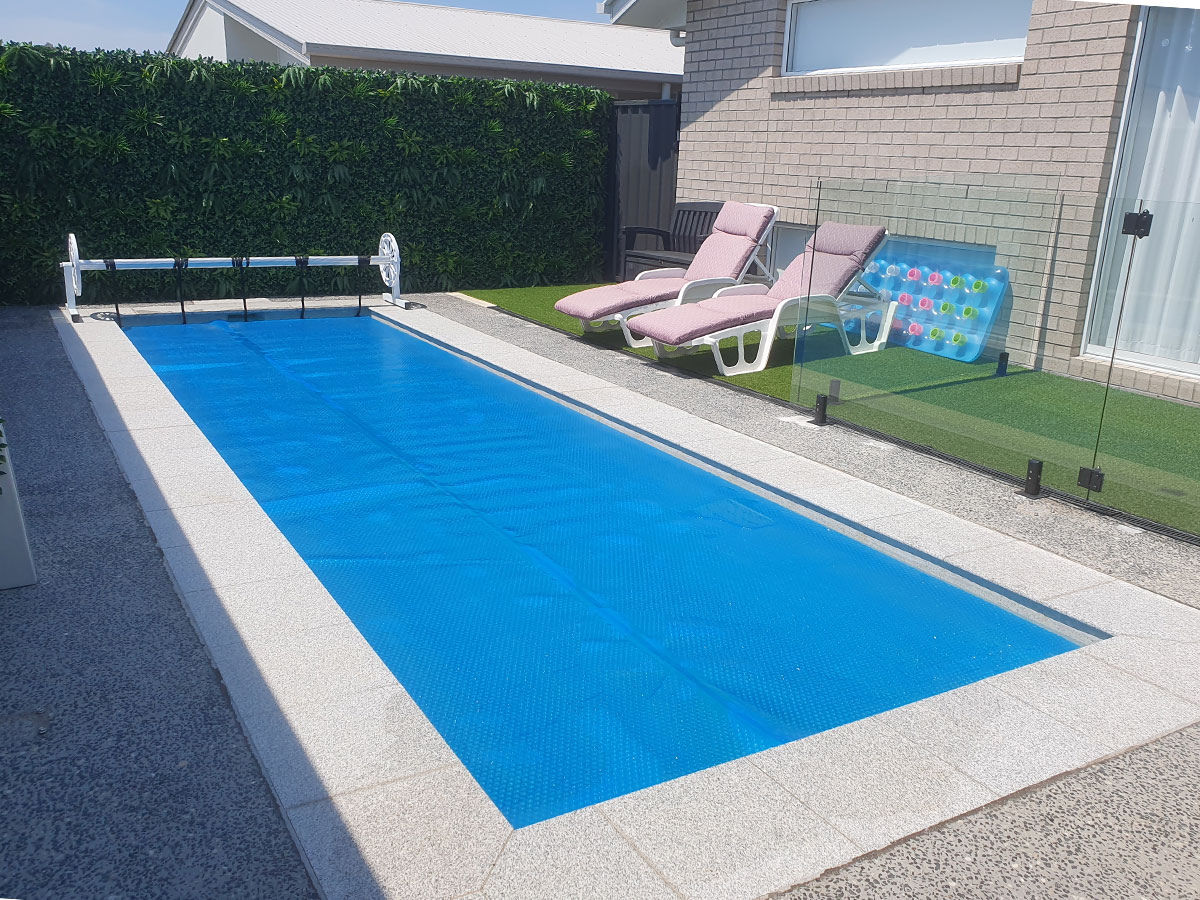
Pool cover on an Australian backyard pool

The short version

  • Most Australians should start with a solar (bubble) cover — the best all-round mix of heating, lower evaporation, easier maintenance and price.
  • Origin matters more than the micron number — a quality Australian-made cover often outlasts a cheap import (a 250-micron Australian cover can outlast a 500-micron import).
  • Go higher micron for longer life and better heating — experienced owners almost always do.
  • A good cover delivers about 5–7°C warmer average water, around 97% less evaporation, and keeps leaves and ducks out.
  • Custom sizing beats off-the-shelf (less waste, better fit); laser-trim is accurate to the centimetre.
  • About 95% of owners self-install — paying for supply-and-install typically adds 50–100%.
  • A roller is a must-have for most pools (a tiny plunge pool is the exception).
  • A real warranty is written, from a known Australian manufacturer, and registrable and claimable online.

Which type of cover is right for you?

Pool covers aren’t all solving the same problem — start with the job you need yours to do. For more than 90% of pool owners, a solar (bubble) cover is the right call: it warms the pool, cuts evaporation, slows chemical loss and keeps leaves out, for the lowest price of the three types.

Solar (bubble)

  • Best for ~90% of pools
  • Best all-round balance of heating, evaporation control and price
  • Needs handling, ideally with a roller
Cost: baseline

Thermal (foam)

  • Best for pools relying on a heat pump
  • Focused on retaining added heat
  • Less about free solar gain
50–100% more

Tie-down mesh

  • Best for severe leaf litter
  • Highest leaf protection
  • Ties down at 20–30 points; less convenient
3–4× solar

When a thermal (foam) cover makes sense

A solar cover mainly collects free heat from the sun; a thermal foam cover is more about holding heat you’ve already paid to add. So foam suits owners who lean heavily on a heat pump. It uses more material, so expect to pay 50–100% more than an equivalent solar cover.

When a tie-down leaf cover makes sense

Reserve this for the severe cases — overhanging deciduous or native trees, constant debris. It costs three to four times a high-grade solar cover and ties down at 20–30 points. For most leaf problems a floating solar cover is enough.


What drives the price

This isn’t the price page, but knowing the drivers stops you buying the wrong thing. In order of impact:

1. Origin — the factor most buyers overlook

Australian-made covers use better plastics and come with a warranty you can actually use. Cheaper imports can look identical in a photo but resist pool chemicals and UV far less well — less durable even at high micron grades. The rule: don’t judge a cover by micron alone; an Australian-made 250-micron cover will often outlast an imported 500. Be wary of marketplace “warranties” with no manufacturer behind them.

2. Micron grade — what you pay for

Micron grade is, in effect, how much plastic is in the cover. A 500 has double the plastic of a 250; a 600 has 50% more per square metre than a 400. More material buys a longer life and better heating. Think in cost per year, not sticker price — which is why owners who’ve used covers for decades almost always buy a high grade.

Choose a lower micron grade if

  • you are working to a tight budget
  • you may sell the home within a couple of years
  • it is your first cover and you want to prove the benefits first

Choose a higher grade (550–600) if

  • you want the longest life and the best heating
  • you will use the cover regularly and would rather not repeat the buy-and-install job sooner than you must
The mistake to avoid: don’t buy an imported high-micron cover assuming it’ll match an Australian-made one at the same grade. Plastic quality, UV and chemical resistance, and real warranty support matter just as much as the number.

Custom size vs off-the-shelf

Off-the-shelf

  • Sold in fixed sizes like 8m × 4m or 10m × 5m
  • A pool at 8.1m × 4.1m forces you up to the next size — wasted material
  • Worse waste again with a side-step area
  • Usually imported, so often lower-grade plastic

Custom & laser-trim

  • Made to your pool, not forced to fit a stock rectangle
  • Laser-trim is cut to centimetre accuracy
  • No manual trimming on site
  • Minimal wasted material

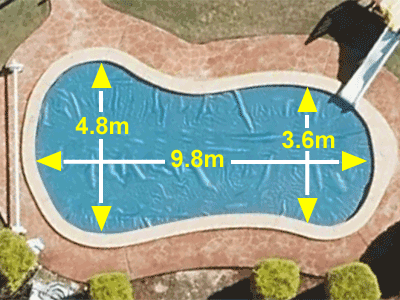
Free-form pool (kidney, etc.)? You can still use a cover — lay it over the pool and trim with sharp scissors so it sits a little larger than the water, edges curling up the walls about 5cm.

How to measure your pool for a cover

The golden rule: measure the water, not the coping. A solar cover sits on the water, inside the pool.

For a rectangular pool

  • Measure the wall-to-wall water length
  • Measure the wall-to-wall water width
  • Ignore the coping or paving around the pool

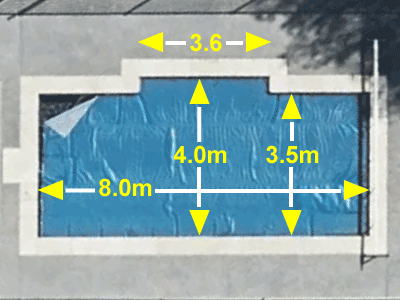
For a pool with a side area

  • Measure the main pool area first, excluding the side area
  • Measure the side area separately
  • If it is at one end, note left or right (stand there, look to the far end, record which hand it is on)
Not confident measuring? Don’t guess from memory — an undersized cover is the most common, most painful mistake. Our free Aerial Measure recommends the right size and shape from overhead imagery.

Do you need a pool cover roller?

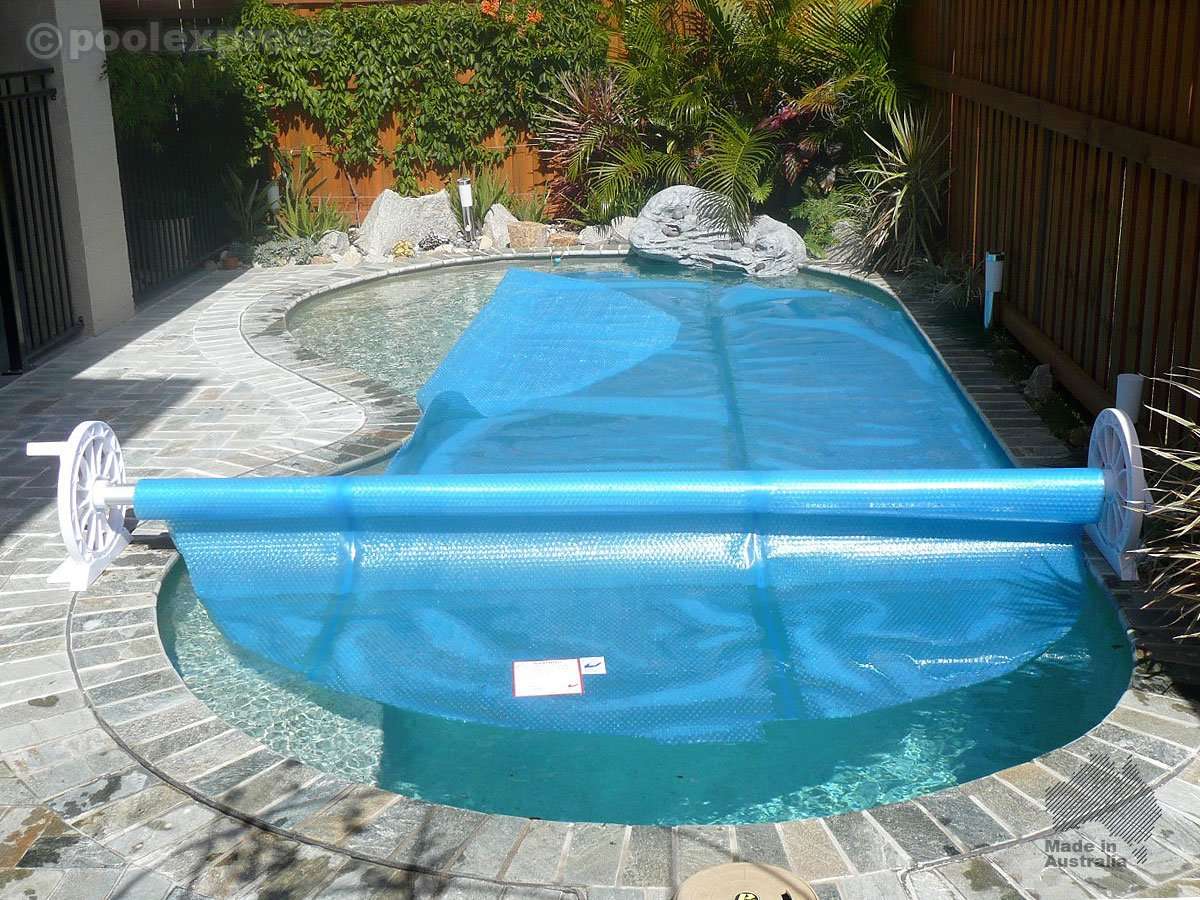
For anything bigger than a small plunge pool, a roller is more or less a must-have — the easier a cover is to take off and put back, the more you’ll use it. All our rollers suit all our covers and come in a range of lengths, so the real choice is form factor.

Pegasus

Simple, compact and low to the ground. Best if you want the roller to be as visually unobtrusive as possible.

Apollo / Endurance

Taller, so they’re easier to reach without bending or crouching — and the top hand-wheels take less effort than turning a low crank handle.

Warranty & lifespan — what’s actually real

The warranty length is a fair estimate of real-world life when the cover is used correctly. One thing to know first: pool cover warranties are universally pro-rata — claim at year 5 on a 10-year warranty and you’d typically be offered a replacement at about half price, not a free one.

What voids a cover warranty?

  • Severe or excessive pool-chemical dosing
  • Leaving the cover on the roller in the sun for long periods without a protective over-cover

What makes a warranty genuine?

  • A written manufacturer warranty, from a known Australian manufacturer
  • The ability to register online, with a simple online claim
  • Avoid vague marketplace warranties with no manufacturer behind them

Common buying mistakes to avoid

  • Buying cheap or imported and expecting 5+ years (fine only if you are about to move)
  • Choosing by micron alone — a 500 import is not automatically better than a 250 Australian-made cover
  • Guessing your dimensions — too large can be trimmed; too small cannot
  • Missing the extras — check delivery and roller connections are included; on a replacement, get new connections that match your old setup
  • Assuming “Australian made” — a flag is not proof; check the manufacturer and warranty process

The questions buyers ask us most

Does the colour of the cover affect heating?

Not in any way worth worrying about — colour is mostly personal taste.

Can I use a cover on a kidney or free-form pool?

Yes. Lay it over the pool and trim with sharp scissors during installation, a little larger than the water so the edges curl up the wall about 5cm.

Which cover is best for heating?

For most pools, a solar cover. Higher micron grades (550–600) collect and hold heat better and last longest.

How do I connect a replacement cover to my existing roller?

With a fresh set of cover-to-roller connections — eyelets-and-cords or adjustable black straps that match your previous cover.

How much warmer will my pool actually be?

A good cover typically raises average water temperature by 5–7°C across most of Australia from late spring to early–mid autumn.

Will a pool cover reduce evaporation?

Yes — by around 97%. Many owners go from topping up twice a week in summer to twice a year.

Can I leave the cover on all year?

Yes — keeping it on as much as possible gives the most heating and least maintenance. Many owners only take it off to swim.

Do I still run the pool in winter with the cover on?

Yes. A cover keeps the water cleaner but doesn’t filter or treat it, so keep the filter running (often at reduced run-times).

Do I need a full tie-down cover for leaves?

Only for severe cases — overhanging deciduous or native trees. Most ordinary leaf problems are managed with a floating solar cover.

We have a duck problem — will a cover help?

Almost always, yes. Ducks visit for clean, open water; cover it and they soon lose interest.

My pool has side steps — how do I handle that?

Fold the side section over onto the main area before winding onto the roller. It adds almost no time and won’t damage the cover.

Can we install the cover and roller ourselves?

Yes — about 95% of Australian owners self-install. Supply-and-install can add 50–100% to the cost.

Why buy from Pool Express

A good buying guide should help you choose confidently — not push you to the most expensive option. Pool Express is a fit if you want:

  • Australian-made covers only, with real warranties you can register and claim online
  • Lower prices than other retailers offering comparable Australian-made grades
  • The fastest dispatch and delivery in the industry, with online tracking on every order
  • Custom sizing done right — laser-trim to the centimetre, or a fast, free Aerial Measure
  • 21 years supplying covers, rollers and liners, with responsive service
  • Australia’s largest ABGAL retailer
Pool Express - Black and white icon of a wristwatch displaying the time at approximately 10:10, centered within a gray circle on a black background.
9am-5pm Mon-Fri
Pool Express - Black telephone handset icon centered on a light gray circular background, resembling a call or phone symbol.
1800 46 1113
location-3
17 Gould Road,
Herston, QLD 4006
location-3
51, 1101 Hay Street,
West Perth, WA 6005
location-3
230, 125 Oxford St.
Bondi Junction, 2022
google home 1
facebook home 1
youtube home 1
linked in home 1

© Copyright 2005-2026 – Pool Express

Ask Pool Express Questions

Get an Instant Aerial Measure & Quote

Free Service - Immediate Reply, 7 days a week

We use detailed imagery from a specialized service, offering better accuracy than Google. We can then recommend the best cover sizing, reducing installation effort while minimizing wastage and expense.
Aerial Measure 4
Aerial Measure 5

Message Sent – Check Your Email Shortly

We typically respond within an hour, and even faster during business hours. After reviewing our assessment and quote, feel free to reply with any questions.